Tire Buying Guides
Free shipping
Best price guarantee
SimpleCrew exclusive savings
0% APR Financing
Tire replacement coverage
24/7 roadside assistance
Easy returns
Last updated 6/23/2026 - Originally published 10/01/2024
Written by Irfan Khan, Expertly reviewed by Brett Antosh
All-Weather Tires vs. All-Season vs. Winter: Which Is Right for You?
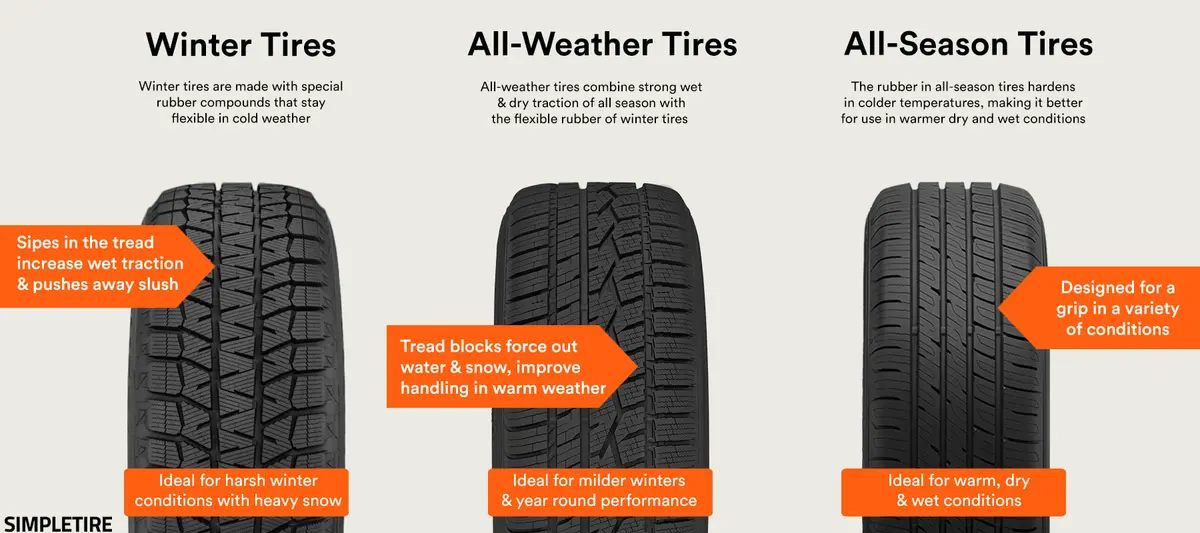
Choosing the right tires for your vehicle involves understanding how different tire types perform across various weather conditions and temperatures. Each tire category—winter, all-weather, and all-season—serves specific driving needs and offers distinct advantages depending on your climate and driving habits.
Understanding All-Weather, All-Season, and Winter Tires
All-Weather tires
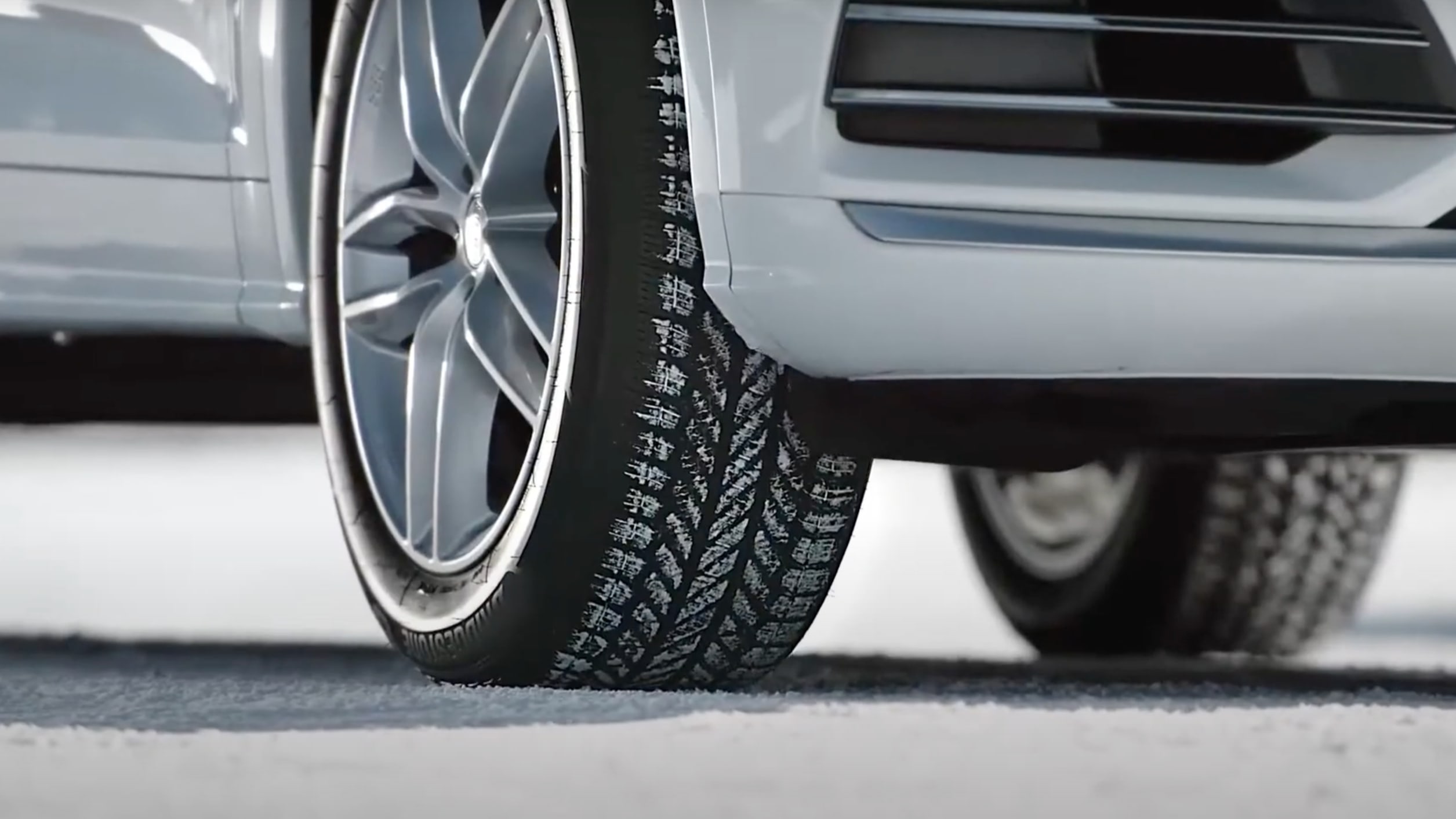
All-weather tires represent a hybrid category designed to provide reliable year-round performance, including certified traction for snow and ice, without the need for seasonal changeovers. These tires bridge the gap between traditional seasonal sets by offering:
- Three-Peak Mountain Snowflake (3PMSF) Certification: Guaranteed performance in severe snow conditions.
- Temperature Versatility: Rubber compounds that remain flexible in freezing cold and stable in summer heat.
- Year-Round Convenience: No need for tire storage or biannual installation appointments.
- Enhanced Safety: Superior wet and slush traction compared to standard all-season models.
Popular models like the Continental SecureContact AW and Bridgestone WeatherPeak have proven that year-round performance no longer requires significant compromise.
All-Season Tires
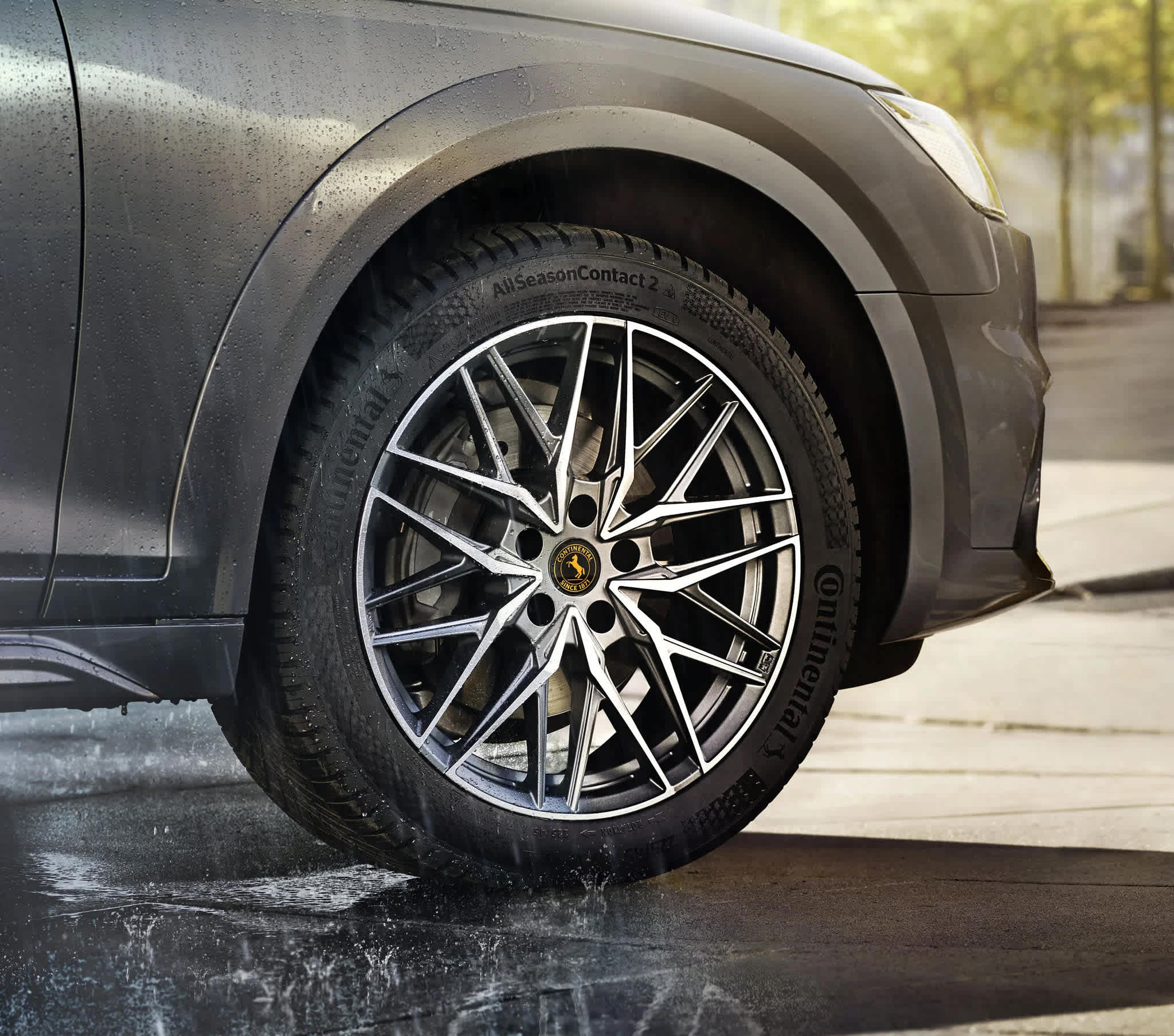
All-season tires remain the most popular choice among drivers, coming as standard equipment on the majority of new vehicles. These tires prioritize versatility and longevity for moderate weather conditions: delivering reliable performance in rain, dry pavement, and even light snow when temperatures stay above 45°F.
The engineering philosophy behind all-season tires focuses on balance. Their moderate tread depth—typically ranging from 8/32" to 10/32" when new—provides adequate water evacuation for wet conditions while maintaining a quiet, comfortable ride. The harder rubber compounds used in their construction promote even wear and extended tread life, often backed by warranties extending to 70,000 miles or more.
Winter Tires

Winter tires represent the pinnacle of cold-weather performance, engineered specifically to excel when temperatures drop below 45°F. These specialized tires feature soft rubber compounds that maintain flexibility in freezing conditions—a critical characteristic that allows the tire to conform to road surfaces and maintain grip when other tire types become rigid.
The trade-off for this exceptional winter performance is that these tires must be removed when spring arrives. The same soft compounds that provide winter grip wear rapidly in warm weather. This seasonal requirement means owners need storage space and must budget for twice-yearly installation costs for models like the Nokian Hakkapeliitta.
All-Season vs All-Weather Tires: Key Differences
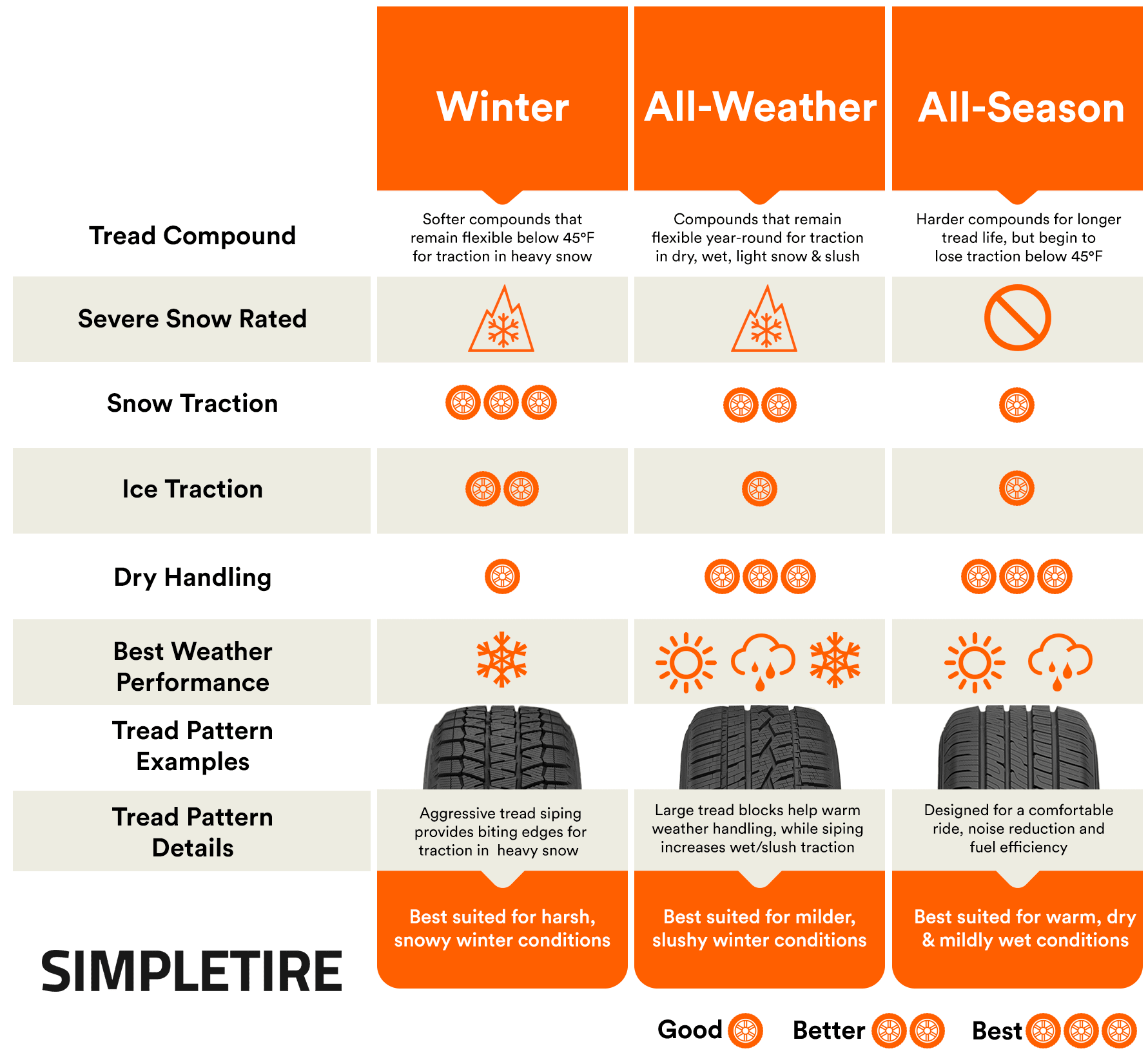
When comparing all-season vs all-weather tires, the primary distinction lies in their temperature threshold and snow certification. While both are designed for year-round use, all-season tires are essentially "three-season" tires that lose grip as soon as temperatures hit freezing. It is crucial to understand the M+S symbol (usually found on all-season tires) versus the Three-Peak Mountain Snowflake (3PMSF).
- M+S (Mud and Snow): Found on most all-season tires, this indicates the tread pattern has a certain amount of open space to help in mud or light snow, but it does not involve a cold-weather traction test.
- 3PMSF (Three-Peak Mountain Snowflake): Found on all-weather and winter tires, this symbol confirms the tire has passed rigorous testing for acceleration on medium-packed snow.
Snow Tires vs All-Weather Tires: When to Choose Maximum Grip
The debate between snow tires vs all-weather tires usually comes down to the severity of your local winter. If you live in an area with "black ice," unplowed mountain passes, or consistent temperatures below 20°F, dedicated snow tires are the safest choice.
However, in the battle of all-weather vs winter tires for suburban or city drivers, all-weather tires often win on convenience. They provide roughly 80% of the snow traction of a dedicated winter tire but can be driven safely through July and August without melting away. If you encounter slush and occasional snow rather than deep, permanent snowpacks, all-weather tires are the more efficient investment.
How Do These Tire Types Perform in Different Conditions?
Winter Weather Performance
Winter tires dominate in extreme cold, specifically engineered to maintain traction on snow and ice. Their rubber stays pliable in low temperatures, ensuring a secure grip on slick surfaces. All-weather tires provide a commendable alternative for those facing moderate winter conditions. With the 3PMSF certification, they are designed to handle light snow and icy patches efficiently. All-season tires, in contrast, are less equipped for harsh winter weather. Their performance drops significantly when confronted with ice and deeper snow.
Year-Round Versatility
For those seeking convenience, all-weather tires offer a year-round solution. Designed to perform across a range of conditions, they eliminate the need for seasonal tire changes and storage logistics. All-season tires also provide a year-round option but are best suited to regions where winter conditions are mild and infrequent. Winter tires necessitate a more seasonal approach, requiring a swap as temperatures rise to prevent accelerated wear.
Yes, all-weather tires are specifically designed to be driven in both the heat of summer and the snow of winter. Unlike winter tires, their rubber compound will not wear down prematurely in warm temperatures.
The main difference is winter performance. All-weather tires are certified with the 3PMSF symbol for severe snow service, while all-season tires are generally only suited for rain and very light, occasional snow.
You may also be interested in:
Speed ratings inform automakers and vehicle owners of the maximum speed capability of their tires. Here’s everything else you should know about tire speed ratings.
Written by SimpleTire
September 17, 2026
Tire load rating is important to consider for the assurance of vehicle safety. Find excellent information on tire facts & load ratings specifically at SimpleTire.com.
Written by SimpleTire
September 15, 2026
Are Puncture-Resistant Tires Worth the Extra Cost?
Learn if the puncture-resistant tires are worth the extra cost compared to the standard tires.
Written by Irfan Khan
September 14, 2026
Ready to find the perfect tires?
Search By