Tire Buying Guides
Free shipping
Best price guarantee
SimpleCrew exclusive savings
0% APR Financing
Tire replacement coverage
24/7 roadside assistance
Easy returns
Many drivers look for affordable ways to replace worn tires. Retreaded tires offer a budget-friendly option with reliable performance and significant savings without compromising safety.
Last updated 4/15/2026 - Originally published 2/25/2025
Written by SimpleTire, Expertly reviewed by Brett Antosh
What are retread tires?
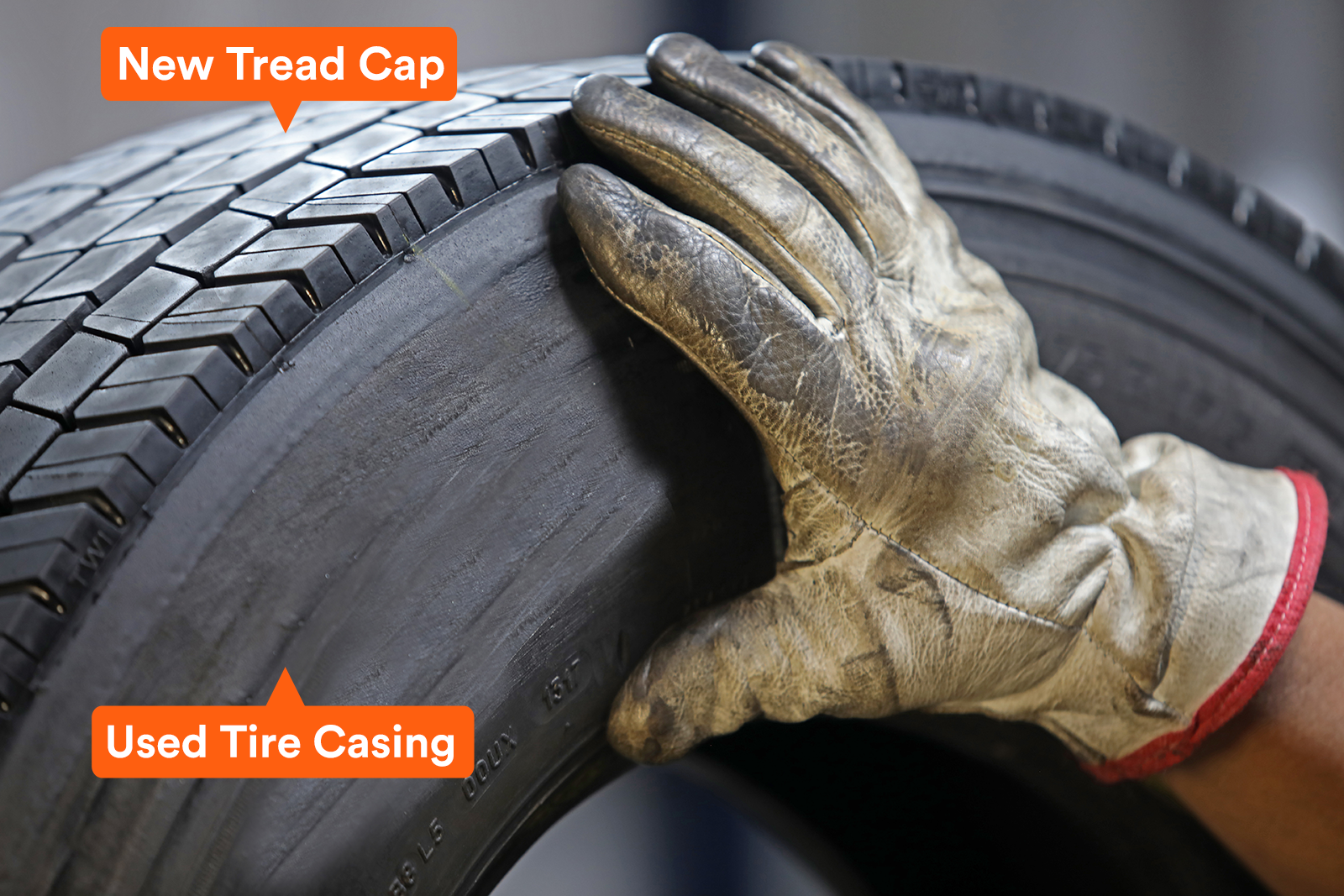
Retreaded tires, also called "recaps" or "remolds," are tires with new rubber applied to the outer surface. Factories inspect the tire's inner structure, then attach fresh tread to extend its life and keep it out of landfills. Drivers save money by avoiding the cost of a completely new tire.
The Anatomy of a Recap
The inner shell is the tire's skeleton. Since this structure typically outlasts the outer rubber, it can be reused multiple times, offering significant savings for buyers who need durable traction.
Every retreaded tire has three main parts:
- The Inner Shell: The solid foundation that provides structure and strength.
- The Tread: Fresh outer rubber that restores grip and traction.
- The Remold: The complete tire combining the old shell with new tread.
How are tires retreaded?
Technicians strip away worn rubber until a smooth surface remains. Advanced tools, like X-rays and shearography machines, scan for hidden flaws. If the tire fails inspection, it's discarded. Once approved, machines wrap fresh tread around the buffed shell. The pieces must bond perfectly using extreme heat and pressure inside a special mold.
The Heat and Pressure Phase
The final step occurs in a high-temperature oven.
- The Cure: High heat permanently bonds the fresh tread to the old shell, melting the materials into one solid piece.
- The Final Polish: Inspectors measure tread depth and check sidewall strength to ensure the tire meets strict safety standards.
Are retread tires safe?
Yes, retreaded tires are safe. Many drivers worry about recap reliability, picturing rubber chunks, called "gators,” on the highway. Modern technology makes retreaded tires safe for everyday use. The National Highway Traffic Safety Administration (NHTSA) found that road hazards, heavy cargo, or low air pressure cause most blowouts. Poor maintenance damages any tire.
Proven Highway Reliability
Strict industry standards ensure retreaded tires perform like new ones. Heavy-duty vehicles rely on them daily.
- Commercial Truck Fleets: Semi-trucks travel millions of miles on retreaded rubber. Fleet managers trust them to haul massive loads safely.
- Aviation Industry: Airlines use recaps for high-speed runway landings, proving their extreme durability.
- Public Transport: School buses and emergency vehicles depend on retreads. Governments trust their proven safety record.
When properly manufactured, retreaded tires deliver excellent mileage and peace of mind.
This version focuses exclusively on the commercial and industrial sectors, framing retreading as a strategic business decision for fleet management rather than a consumer option.
Pros and Cons of Retreaded Tires
Like all tires, retreaded tires come with positives and negatives. These need to be weighed before determining if you should retread your tires.
Pros
- Significant Cost Reduction: Retreading allows fleets to reuse the most expensive part of the tire: the casing. This typically costs 30% to 50% less than purchasing a brand-new tire, providing a massive advantage for long-haul and regional delivery businesses.
- Environmental Sustainability: Manufacturing a retread requires roughly 65% less oil than a new tire (approximately 2 to 3 gallons versus 7 to 8 gallons). This helps companies meet corporate "green" initiatives and reduces the volume of scrap rubber sent to landfills.
- Extended Casing Life: High-tier commercial tires are engineered from the start to be retreaded multiple times. By utilizing a professional retread program, a single quality casing can provide hundreds of thousands of additional miles of service.
Cons
- Casing Integrity Requirements: Not every tire can be retreaded. Casings must pass rigorous inspections (including X-ray and shearography). If a casing has been run underinflated or suffered structural damage, it is rejected, which can lead to unpredictable replacement costs if a fleet doesn't maintain its tires properly.
- Heat Management in Specific Applications: While highly reliable, retreads are more sensitive to extreme heat buildup caused by chronic underinflation or overloading. In high-scrub applications, such as waste hauling or heavy construction, the bond between the tread and casing requires diligent pressure monitoring to prevent failures.
- Maintenance Discipline: To get the full value out of a retreading program, a fleet must have a strict maintenance culture. This includes regular "pull-point" inspections to ensure tires are removed for retreading before the casing itself is damaged by excessive wear or road hazards.
The Strategic Choice: For most commercial operations, the decision to use retreads is a balance between the low acquisition cost of new "budget" tires and the long-term ROI of retreading premium casings. Most major fleets find that premium new tires combined with a professional retread program offer the lowest total cost of ownership.
Should You Buy Retreaded Tires?
For commercial fleet operators, the decision to use retreaded tires is a strategic choice based on Total Cost of Ownership (TCO). In industries where tires are a top-three operating expense, retreading allows businesses to extract maximum value from their initial investment in premium tire casings.
The Value Proposition for Commercial Fleets
For heavy-duty fleet operators, retreading delivers a dual advantage: significant cost savings and environmental impact. By reusing the expensive casing—the tire's most valuable component—fleets maintain performance at a fraction of the price of new tires. Furthermore, the process uses 70% less oil and diverts massive amounts of waste from landfills, directly supporting corporate sustainability mandates.
Matching the Retread to the Application
Different trucks need different types of retreads depending on where they drive:
- Long-Distance Big Rigs: Drivers often start with brand-new tires on the front (steer) wheels. Once the tread wears down, they save the strong outer shells and add new rubber to use them on the back wheels or trailers.
- City Delivery Vans: These trucks do a lot of sharp turns and hit curbs in tight streets. They use a special, extra-tough rubber that doesn't wear out easily from rubbing against the pavement.
- Construction & Garbage Trucks: Since these trucks operate on rough terrain, they use retreads with deep, chunky grooves. This gives them the grip they need without spending too much money when tires get damaged on the job site.
The Importance of Casing Management
A successful retread program relies entirely on casing integrity. To ensure safety and performance, commercial tires must undergo a rigorous inspection process before being approved for a recap:
- Visual & Tactile Inspection: Checking for sidewall damage and bead fatigue.
- Shearography: Using laser technology to detect internal separations or air pockets within the casing that aren't visible to the naked eye.
- Electronic Liner Inspection: Testing for small pinholes that could lead to moisture entering the steel belt package.
Expert Tip: To get the best results, pair your retread program with high-quality commercial tires. Investing in premium casings upfront ensures they can be safely and reliably retreaded multiple times, further lowering your cost-per-mile.
Finding the right tires shouldn't be stressful. We help you make informed choices with a massive selection of affordable, high-quality options tailored to your driving needs and budget. Shop for tires online at SimpleTire.com and find the best deals to get back on the road safely and confidently.
You may also be interested in:
Choosing Lexani Tires: A Guide to Performance and Value
Lexani tires: boost performance & style. Our guide covers types, benefits, & value. Find the perfect Lexani fit for your ride today!
Written by SimpleTire
October 19, 2026
Summit Tires: Reliable and Affordable
Summit Tires: Reliable & affordable tires for any road. Discover quality, budget-friendly options for your vehicle. Drive safely without breaking the bank!
Written by Ankit Verma
October 15, 2026
Speed ratings inform automakers and vehicle owners of the maximum speed capability of their tires. Here’s everything else you should know about tire speed ratings.
Written by SimpleTire
September 17, 2026
Ready to find the perfect tires?
Search By