Tire Buying Guides
Winter Tires vs. All-Season: Your Guide to Cold Weather Safety
Free shipping
Best price guarantee
SimpleCrew exclusive savings
0% APR Financing
Tire replacement coverage
24/7 roadside assistance
Easy returns
Tire Buying Guides
Winter weather demands more from your vehicle than any other season. Investing in the right winter tires ensures you maintain traction and safety when temperatures drop and roads become hazardous with ice and slush.

A winter tire (frequently referred to as a snow tire) is a specialized tire engineered with unique rubber compounds and aggressive tread patterns designed to provide maximum grip in freezing temperatures. While standard tires harden in the cold, these tires remain pliable to "bite" into slippery surfaces.
Key Features of Winter Tires:
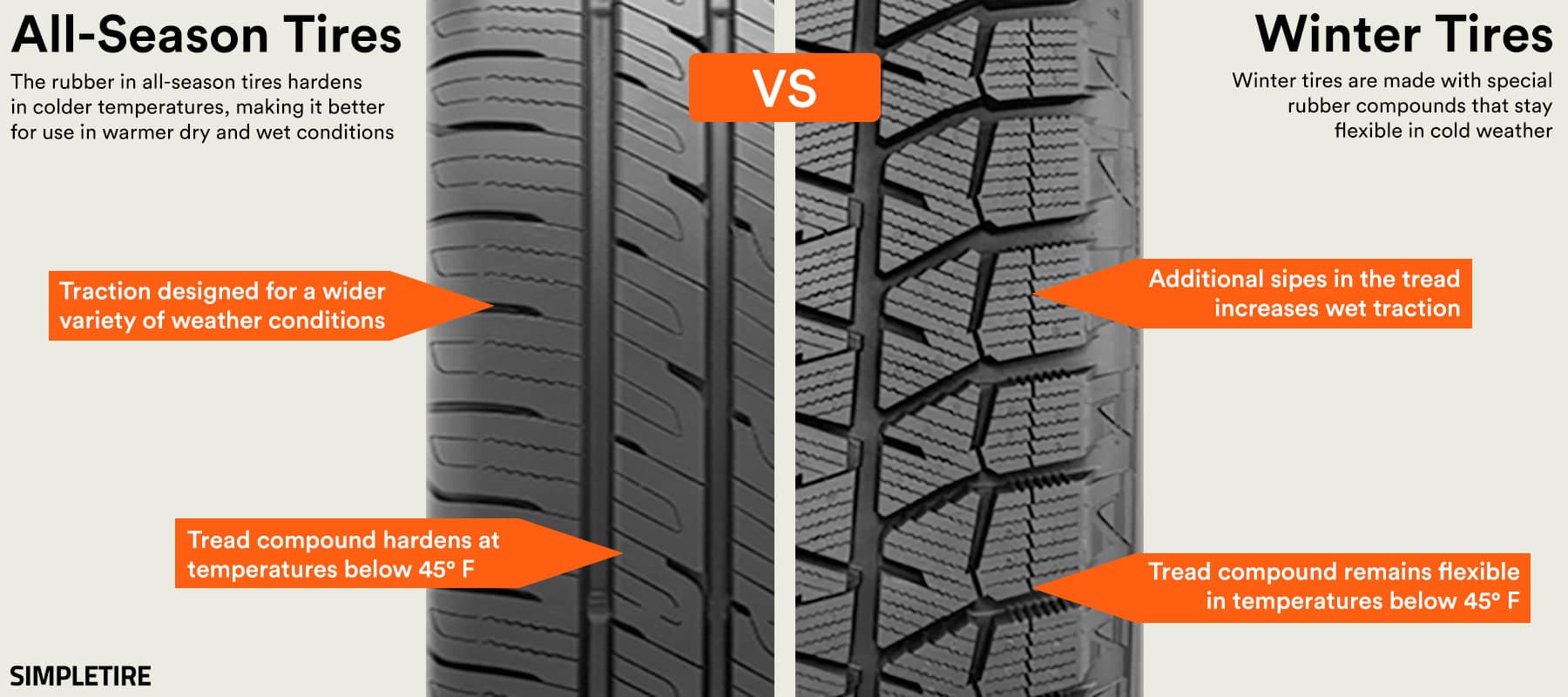
Winter tires represent a significant advancement in automotive safety technology. These specialized tires utilize rubber compounds engineered to remain flexible when temperatures drop below 45°F — the point at which standard tires begin to harden and lose grip. Unlike all-season tires that prioritize longevity, a dedicated winter tire focuses exclusively on cold-weather performance.
The most distinctive feature lies in the tread design. Manufacturers cut thousands of tiny slits called sipes into the tread blocks. These sipes act like miniature edges that bite into ice and packed snow. The tread patterns also feature deeper grooves specifically shaped to channel water, slush, and loose snow away from the tire's contact patch. This aggressive design prevents hydroplaning and maintains road contact even in severe conditions.
The physics of tire performance revolves around temperature thresholds. Every tire compound has a glass transition temperature, the point at which rubber transforms from flexible to rigid. Summer tires reach this threshold around 50°F, while winter tires remain pliable well below freezing. This flexibility allows the tire to conform to road irregularities and maintain crucial grip.
Winter tire engineers exploit an interesting property of snow: its tendency to stick to itself. The deep grooves and sipes pack snow into the tread pattern. This packed snow then grips the snow on the road surface — similar to how a snowball sticks together. Brands like Continental specifically design tread blocks to optimize this snow-on-snow adhesion principle.
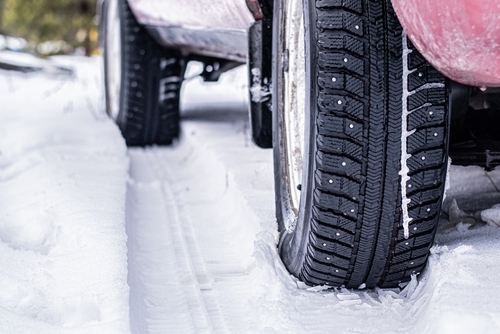
When comparing snow tires vs regular tires, the primary difference is the "operating window." Regular tires (typically summer or standard all-season) are designed for warmth and durability. Once the thermometer hits 45°F, regular tires become like hard plastic, sliding across the pavement rather than gripping it.
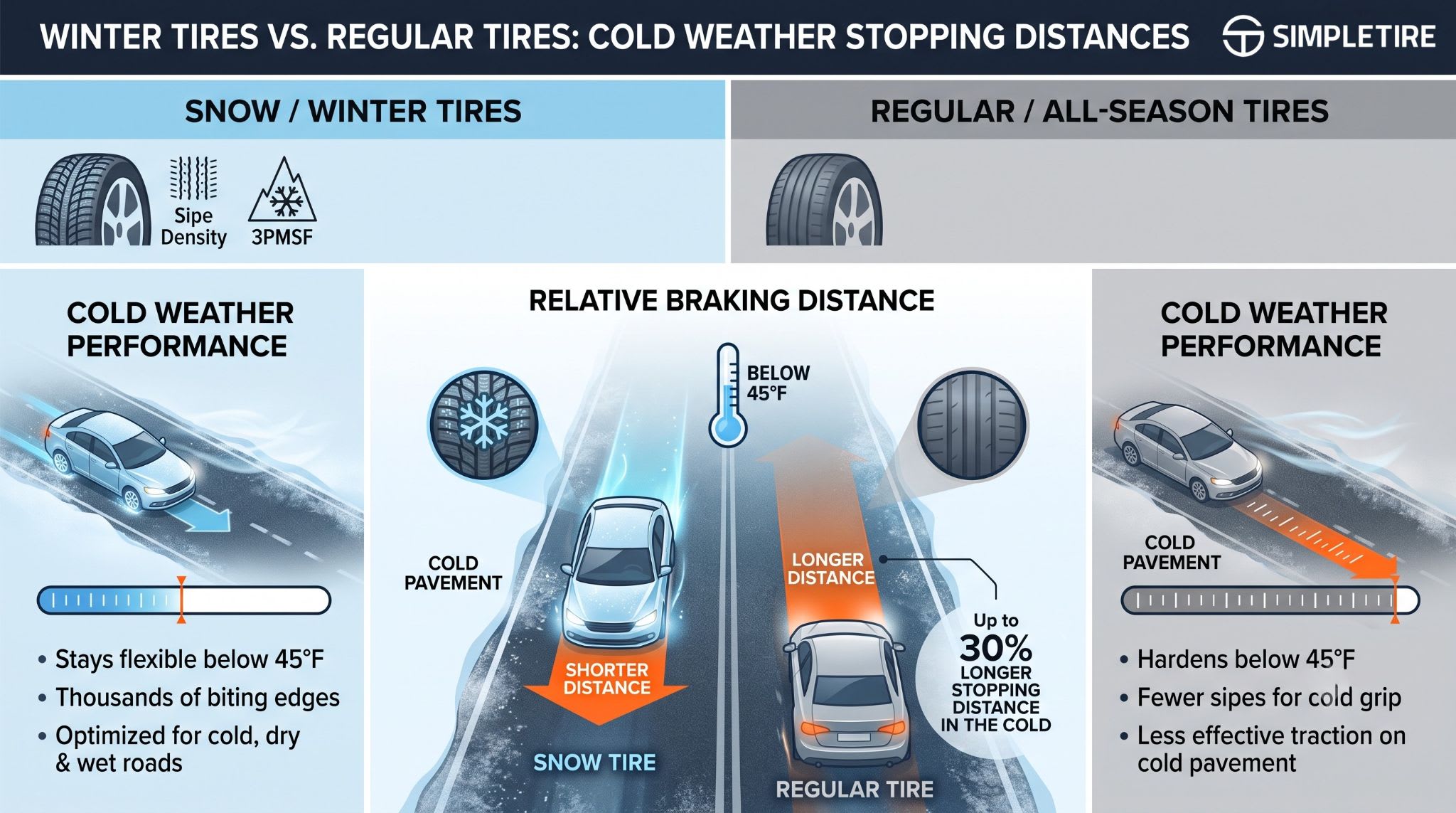
A dedicated snow tire uses a high-silica compound that prevents this hardening. This ensures that even on dry, cold pavement, your stopping distances remain short. In contrast, regular tires can see stopping distances increase by as much as 30% in cold weather, even without snow present.
All-season tires aim for versatility across different weather conditions, yet this leads to trade-offs. Often perceived as suitable for most of the year, these tires struggle in colder temperatures. Their rubber formulas become less effective in gripping the road as it gets colder. While all-season tires adhere to basic safety criteria, they do not meet the stringent requirements necessary for winter driving effectiveness.
The debate of snow tires vs. all-season usually comes down to regional climate. All-season tires are "Jack of all trades, master of none." They provide adequate grip in rain and light summer heat, but they lack the deep siping and cold-weather flexibility of a snow tire.
Drivers who rely on all-season tires in heavy winter zones face a higher likelihood of sliding. Winter tires, crafted with unique materials, provide the confidence necessary for navigating challenging roads.
All-wheel-drive (AWD) systems excel in distributing power to all wheels, enhancing acceleration on slick surfaces. However, this advantage does not extend to braking or cornering capabilities. It's a common belief that AWD vehicles can forgo snow tires, yet this can lead to dangerous overconfidence. Winter tires remain essential for providing the grip needed for safe stopping and turning, which AWD alone cannot address.
The science behind safe winter driving underscores the critical role of tire contact with the road surface. Each vehicle, regardless of its drivetrain, depends on four points of contact where the tire meets the pavement. AWD systems provide improved power distribution but do not influence these essential aspects of driving physics. By pairing the traction benefits of AWD with the specialized grip of a snow tire, drivers experience comprehensive safety enhancements.
The Three Peak Mountain Snowflake symbol is a critical marker, indicating that the tire meets industry standards for severe snow traction.
Properly installing your winter tires ensures your vehicle performs safely. Always fit them in complete sets of four to guarantee uniform traction. Cold temperatures can cause tire pressure to decrease, so a monthly pressure check is essential.
Rotating winter tires according to the manufacturer’s schedule helps prevent uneven wear. When the season ends and temperatures stay above 45°F, store your snow tires in a cool, dark place to preserve the rubber for next year.
Proper tires are the most critical safety component between you and the road. Investing in a dedicated set for the cold months pays dividends through improved control and peace of mind. Ready to find the perfect fit? You can shop for tires online and find the best deals to keep you moving all winter long.
You should install your snow tires when temperatures consistently drop below 45°F (7°C). You don't need to wait for the first snowfall; the rubber compound is designed for cold pavement, not just snow.
Yes, a massive difference. Regular tires (all-season or summer) lack the specialized siping and flexible compounds required to grip ice. A snow tire can reduce braking distances on ice by up to 50% compared to a regular tire.
You may also be interested in:
Choosing Lexani Tires: A Guide to Performance and Value
Lexani tires: boost performance & style. Our guide covers types, benefits, & value. Find the perfect Lexani fit for your ride today!
Summit Tires: Reliable and Affordable
Summit Tires: Reliable & affordable tires for any road. Discover quality, budget-friendly options for your vehicle. Drive safely without breaking the bank!
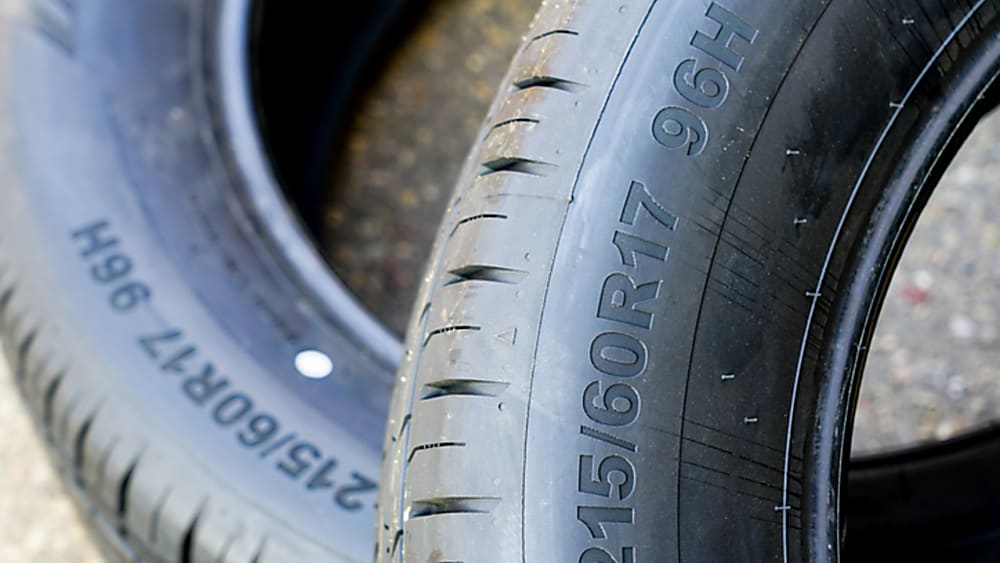
Speed ratings inform automakers and vehicle owners of the maximum speed capability of their tires. Here’s everything else you should know about tire speed ratings.
Search By